
Our services
House Rewiring Specialistsin Burntwood & Surrounding Areas
Every circuit renewed, positions agreed with you before anything is lifted, rooms sequenced so you know when each part of the house is without power, and the mess kept under control. Tested, certified and guaranteed for a year.
Our most reviewed job · NAPIT registered · 1-year guarantee
16 years
In the construction industry
NAPIT
Registered for electrical work
F-Gas
Certified for air conditioning
£5m
Public liability insurance
1 year
Guarantee on all trades
House rewiring
A rewire is the most disruptive electrical job there is, which is why the way it's carried out matters as much as the wiring itself. Full rewires are among the jobs our customers review most often, and what they consistently mention is tidiness and communication.
What a rewire involves
A full rewire replaces the fixed wiring throughout the property: new circuits for sockets, lighting, cooker, shower and any dedicated loads, a new consumer unit with individual RCBO protection, new accessories, and earthing and bonding brought up to the current standard. Cables are routed and chased, the installation is fully tested, certification is issued and notifiable work is registered through NAPIT.
A partial rewire does the same for the circuits that need it, often the lighting or the ring final circuits, while leaving sound circuits in place. Both are carried out by a NAPIT registered business, with Sam holding City & Guilds 2391, the 18th Edition and a Gold ECS card, and 16 years in the trade behind him.
Who it is for
Owners of older houses where the wiring has never been replaced and there is no certificate to show what was done or when. People renovating, where a rewire is far cheaper while the floors are up and the plaster is off. Buyers who have had an unsatisfactory EICR and been told the installation is beyond targeted repair. Landlords bringing an old property up to a lettable standard. And people living in a house where extension leads have quietly become permanent wiring.
When it is needed
When the installation contains rubber or fabric-sheathed cable, which becomes brittle and unsafe to disturb. When an EICR returns multiple C2s across several circuits rather than isolated items. When the property is being renovated anyway, which is the cheapest moment by a wide margin. When there are too few sockets for how the house is actually used. And when previous alterations have accumulated to the point where nobody can say what feeds what.
A rewire is not the automatic answer to a bad report. Where the findings are targeted, remedial work plus a board change is often the better value option, and we will say so.
Why it matters who does it
A rewire is the most disruptive electrical job there is, which is why how it is carried out matters as much as the wiring itself. Full rewires are among the jobs our customers review most often, and what they consistently mention is tidiness and communication, including one customer who had been told by other electricians that her wall would have to be damaged, and it wasn't.
It is also comprehensively notifiable work. Being NAPIT registered means the installation is inspected, tested, certified and registered as part of the job, so the paperwork exists when you sell, remortgage or let.
Planned around how you live
Before anything is lifted we agree socket and light positions, the order of the rooms and how long each part of the house will be without power. On renovation projects we sequence around the other trades on site.
What customers say about rewires
"Stretton did a full house rewire for us. Great service from start to finish!" and "Done a full rewire and remodelling of my humble home and co-ordinated with other trades marvellously to pull it together." Both reviews are from the electrical side of the business under its former name.
What this covers
- Full rewires
- Partial rewires and circuit replacement
- New consumer unit as part of the rewire
- Rewiring during renovation or remodelling
- Chasing, routing and making good
- Full testing and certification
What's at stake
What happens if it's left
Not scare tactics, these are the situations we are actually called out to fix, and what they cost once they escalate.
What old wiring does over time
Rubber and fabric-sheathed insulation from the mid-twentieth century hardens and cracks. Disturbing it, pulling up a carpet, moving a light fitting, running a new cable through a joist, is often what exposes bare conductor. Terminals that have been loaded for fifty years work loose and heat up, which is the mechanism behind most domestic electrical fires.
Older installations also lack the shock protection the regulations now require, and frequently lack adequate earthing at lighting points, so a metal fitting cannot be installed safely without remedial work first.
Costs that escalate
The expensive version of a rewire is the one done after decoration. Rewiring before plaster, flooring and kitchens go in costs a fraction of rewiring afterwards, because the access is free. Doing it out of sequence means chasing finished walls and lifting new floors.
Piecemeal repair is the other escalation: three separate callouts and three separate making-good exercises on an installation that needed replacing, spending a meaningful share of the rewire cost without ending up with a certificate or a modern installation.
Common mistakes we get called to
Rewires carried out room by room by different people over years, leaving a board nobody can interpret and no certification. Socket positions decided by the electrician rather than the person living there, so the extension leads come straight back out. Cables buried outside the permitted safe zones and without protection, which makes future drilling dangerous. And making good treated as somebody else's problem, so a finished rewire leaves the house looking unfinished.
Our process
How the job runs, start to finish
The same sequence every time, so you know what happens next and when.
Step 1
Survey and plan
We walk the house with you, agree socket, switch and light positions room by room, and establish whether a full or partial rewire is genuinely the right call.
Step 2
Price and sequence
You get a price and a room-by-room sequence, including how long each part of the house will be without power and how it fits around other trades if you have them.
Step 3
First fix
Sheets down, cables run, chases cut where they are needed, back boxes set, routes kept in the permitted safe zones or protected where they cannot be.
Step 4
Second fix and board
Accessories fitted, new consumer unit installed with individual RCBO protection, circuits labelled, and making good completed as part of the job.
Step 5
Test, certify, register
Full testing across the installation, certification issued, notifiable work registered through NAPIT, house left clean. 1-year guarantee on the work.
What you get
What this actually gives you
Every job carries 1-year guarantee on all work and is covered by our insurance.
Designed around how you live
Positions agreed before anything is cut, so sockets end up where you actually need them and extension leads can be retired.
Disruption you can plan around
A room-by-room sequence and stated power-off periods, rather than an open-ended job in the middle of your house.
Tidiness customers mention by name
Neat routes, controlled chasing and a clean area, the single most common theme in our reviews.
A whole installation to current standard
New circuits, new board with per-circuit protection, and earthing and bonding brought up to the 18th Edition.
Paperwork that stands up
Tested, certified and registered through NAPIT, so the installation is documented for a sale, a remortgage or a tenancy.
Trades co-ordinated
On renovations Sam sequences around the other trades on site, praised by a customer whose rewire and remodelling ran together.
In detail
Materials, methods and variations
The specifics behind the work, for anyone who wants to know exactly what they're buying.
Materials and methods
Circuits are wired in twin and earth sized for the load and the installation method, with SWA used for outbuildings and external runs. Cables are routed in the permitted safe zones, or protected by earthed capping where a route cannot follow them, so that anyone drilling in future has a defined risk rather than an unknown one. Back boxes are fixed to sound material, not bowed plasterboard.
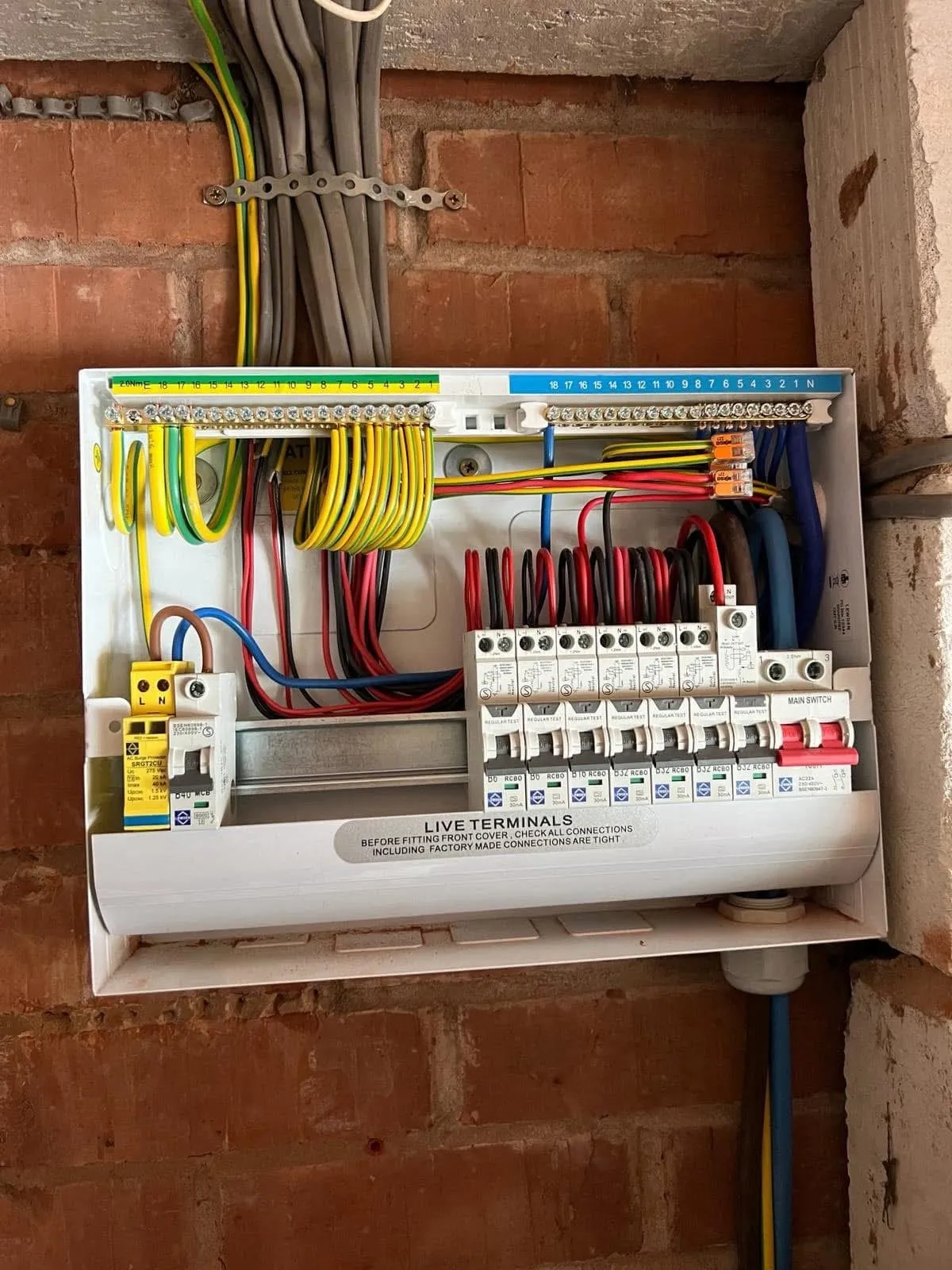
The new consumer unit is steel-enclosed with individual RCBO protection per circuit and surge protection where appropriate. Earthing conductors are sized for the supply arrangement and main bonding to incoming services is installed or upgraded as part of the work. Every circuit is labelled at the board in language the household can use.
Variations of a rewire
A full rewire in an empty property is the fastest and least disruptive version. A full rewire in an occupied house is staged room by room with agreed power-off windows. A partial rewire targets specific circuits, commonly lighting circuits in a house where the sockets were already replaced. A renovation rewire is planned with the builder and plasterer so first fix happens before plaster and second fix after.
Rewires in period and solid-wall properties need their own approach, surface containment, existing conduit routes, or careful chasing where lath and plaster will not tolerate rough treatment.
Situations this applies to
Houses last wired before the 1980s. Properties with rewireable fuse boxes and no RCD protection. Homes with multiple undocumented alterations. Renovation projects where walls and floors are already open. Rental properties with unsatisfactory EICRs across several circuits. And properties where lighting circuits have no earth, preventing metal fittings from being installed safely.
Living in the house during a rewire
Most of our rewires happen in occupied homes, so the practical questions matter: which rooms are usable each day, when the kitchen is without power, how the dust is controlled, and whether the heating stays on. Those answers form part of the sequence you get with the price.
Making good is part of the job. Chases are filled and floors put back, so the house is handed over ready for decoration rather than with the finishing left open.
Our work
A range of jobs we've carried out
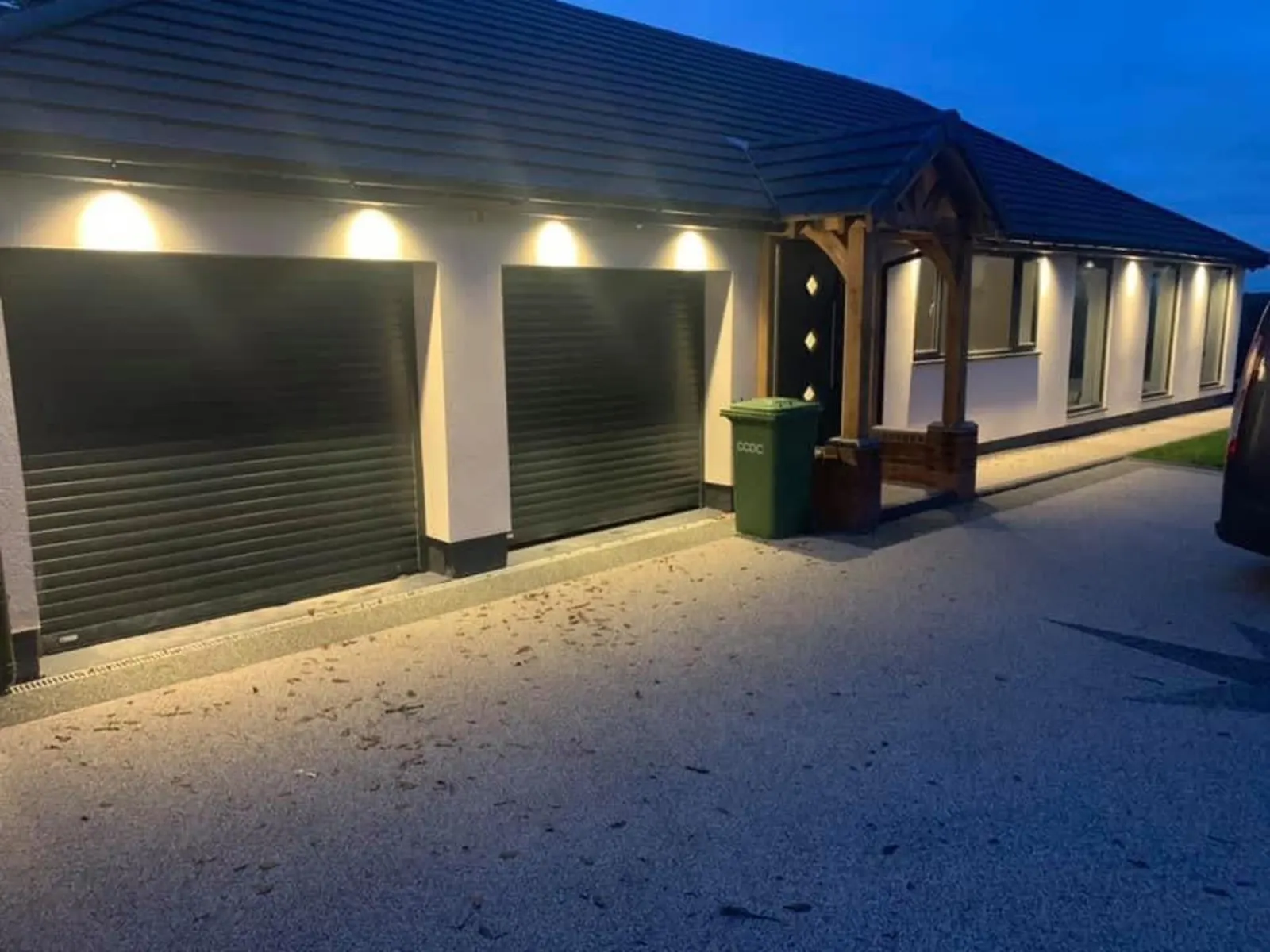
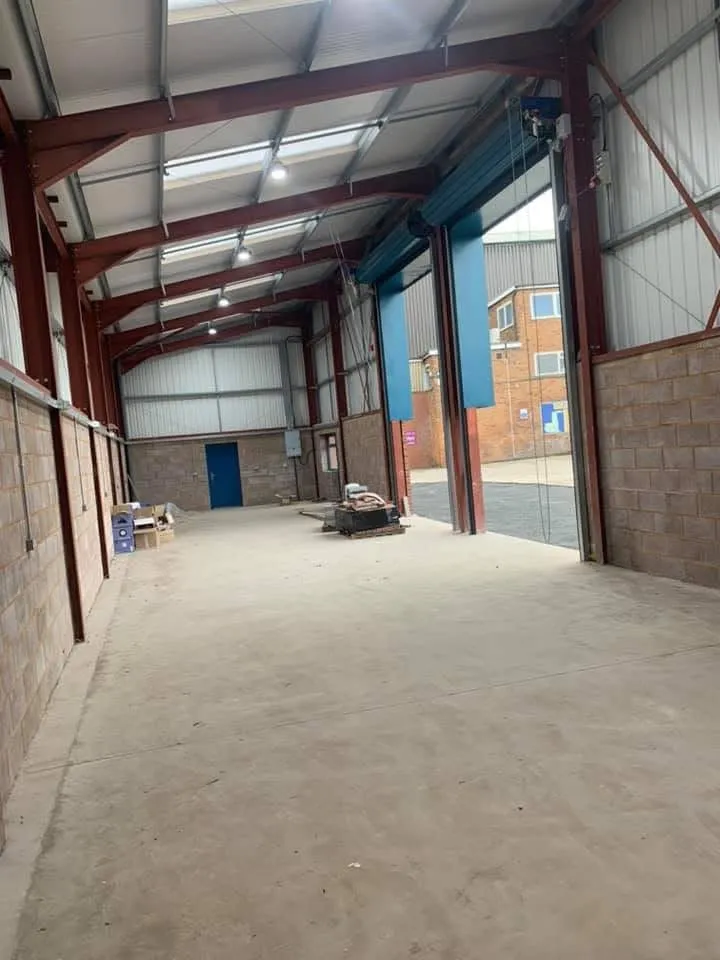
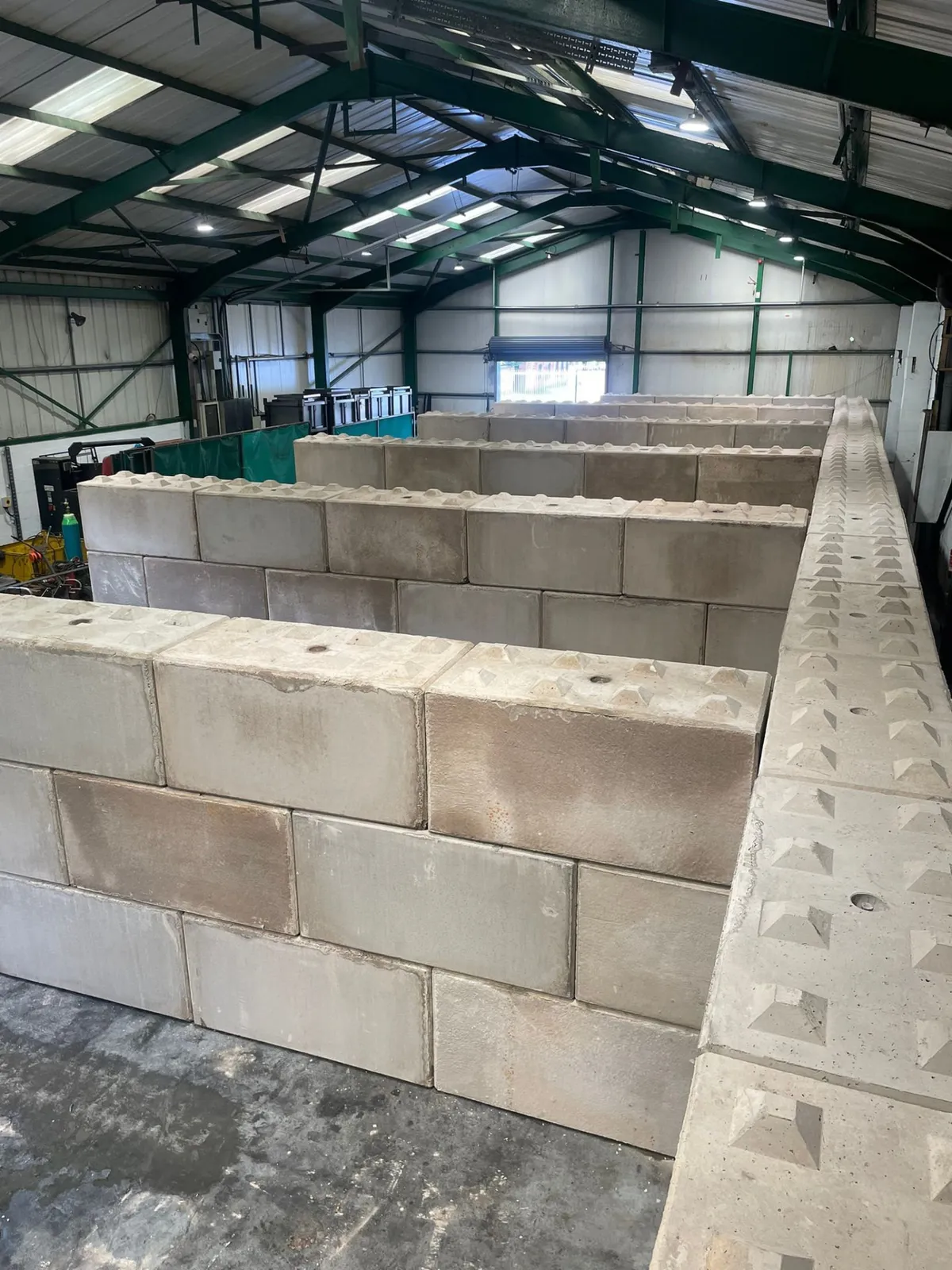
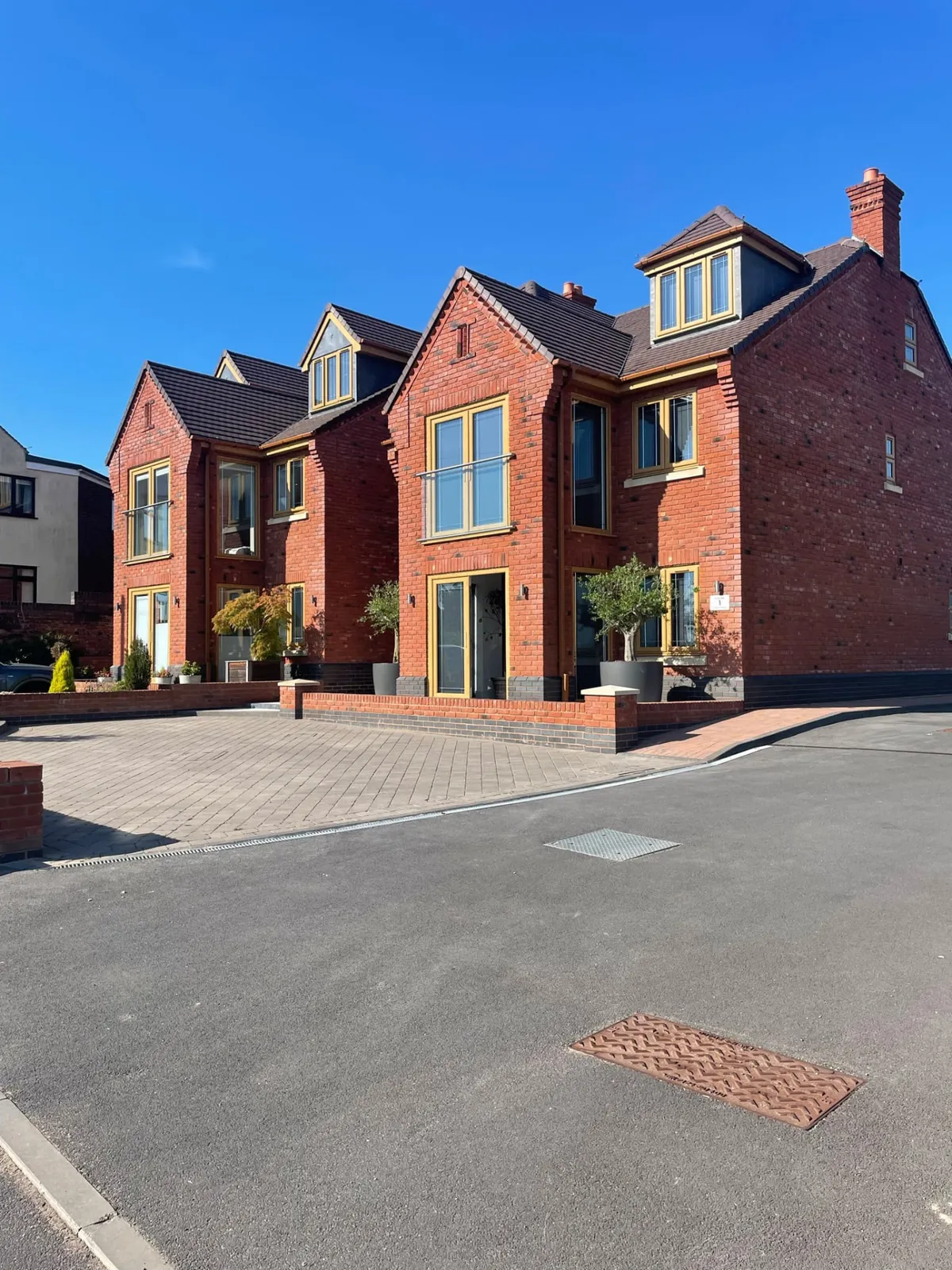
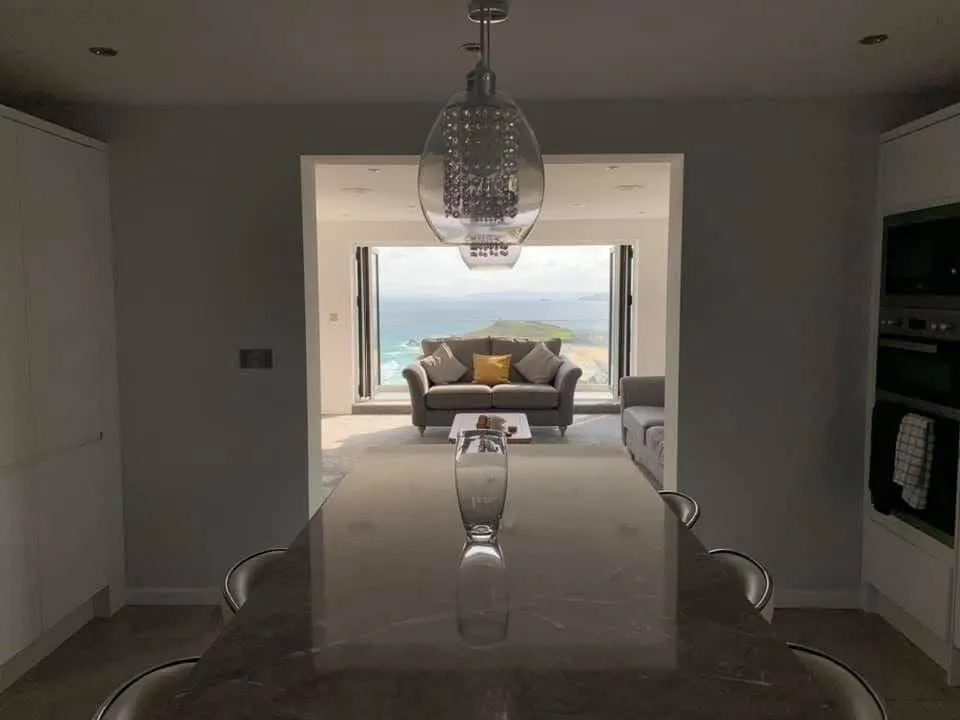
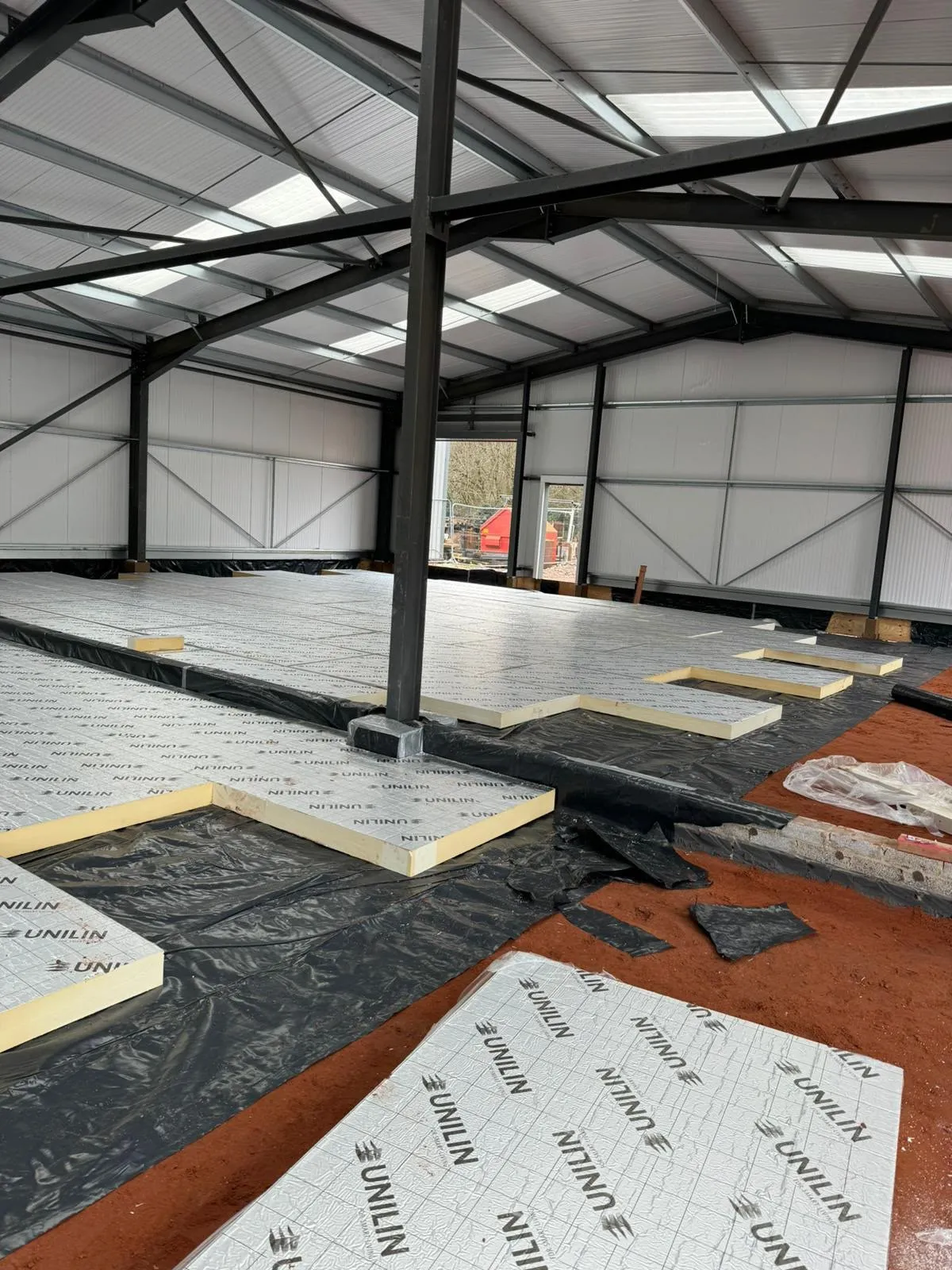
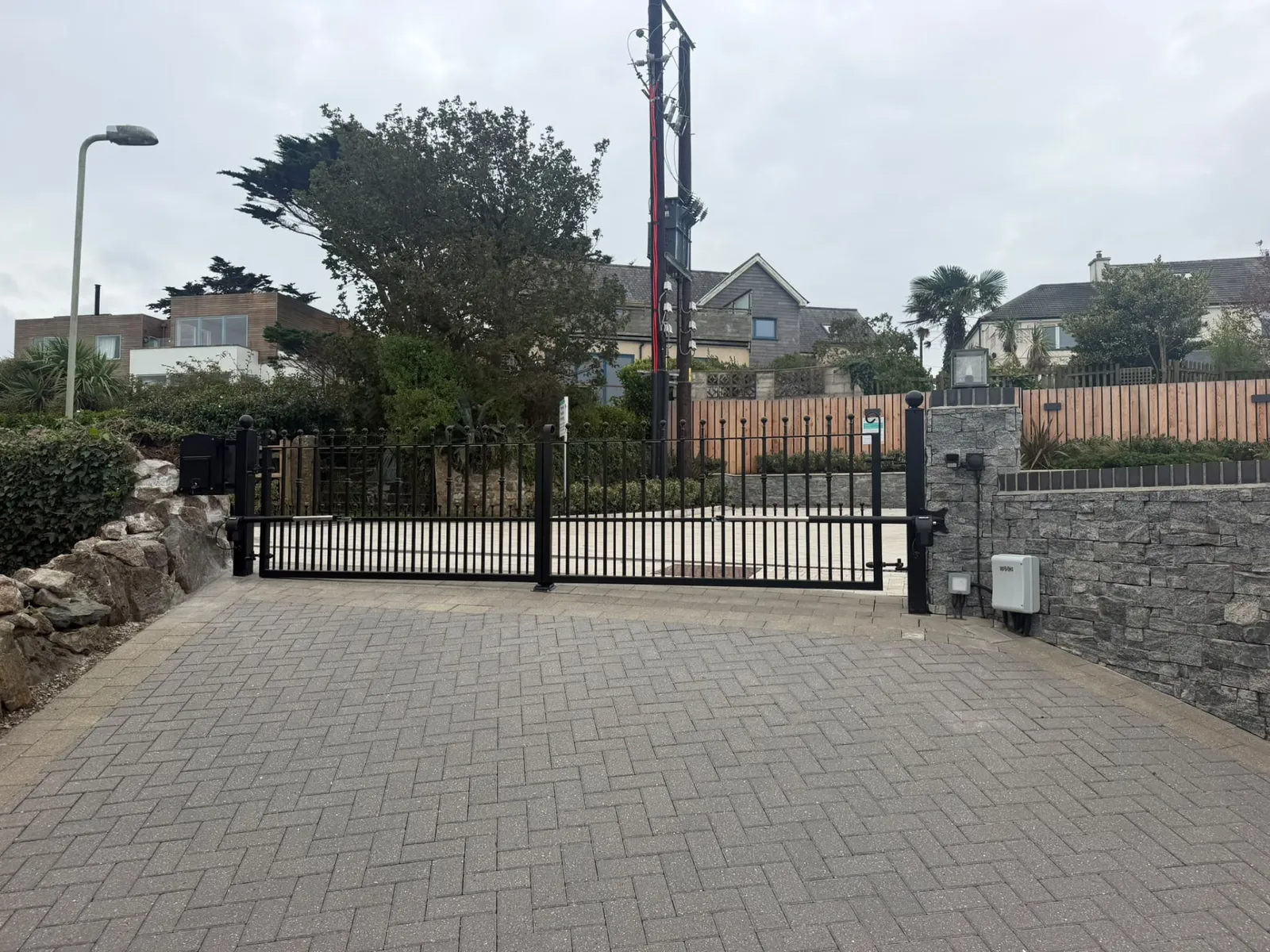
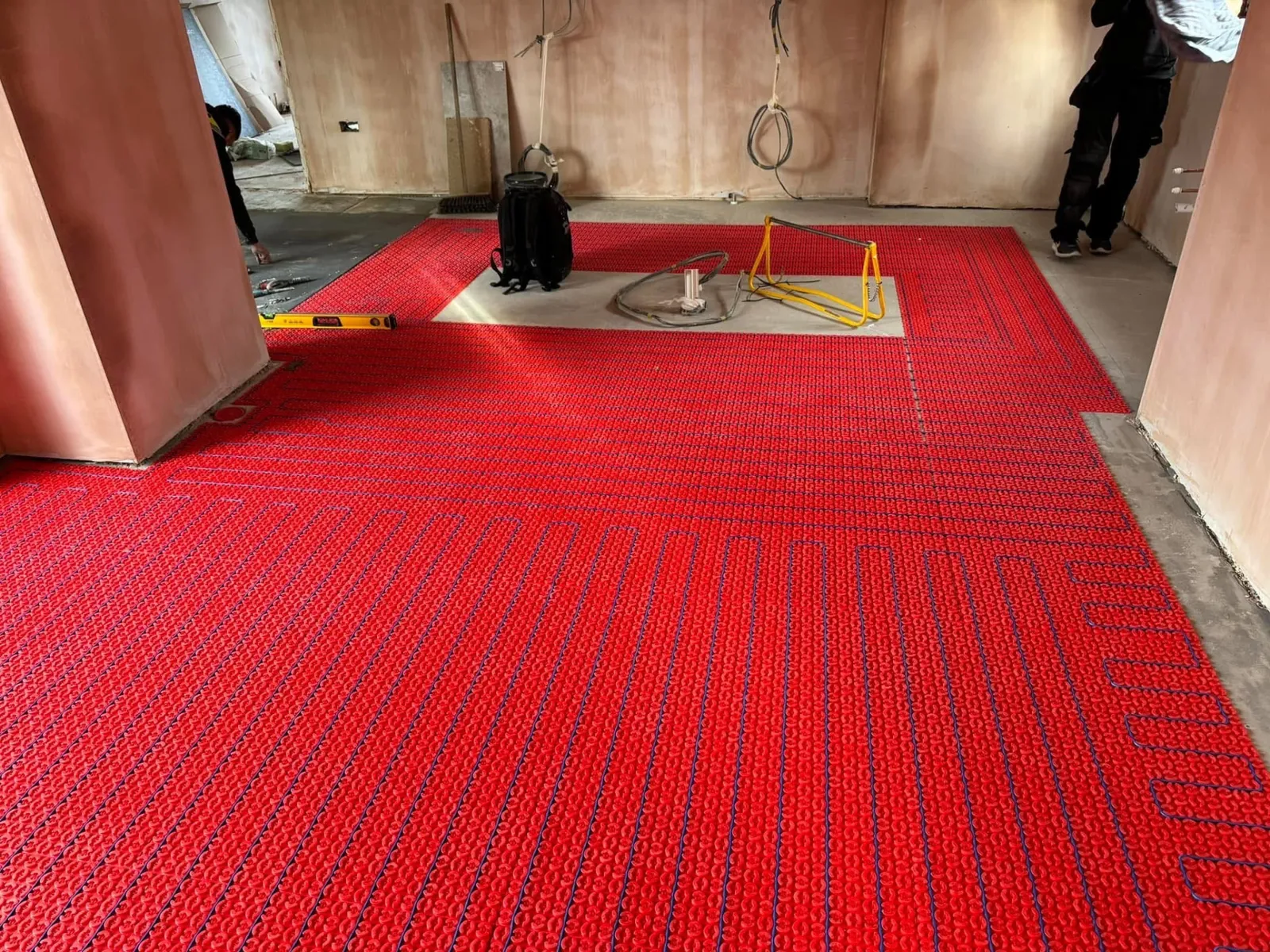
Photographs from jobs across Staffordshire and the West Midlands, all our own work, none of it stock imagery. Scroll along for more.





What customers say
Reviews from the electrical side of the business
Every review below was left for electrical work carried out as Stretton Electrical. We use them as proof of how we work, not as evidence of groundworks, aircon or building jobs.
“Done a full rewire and remodelling of my humble home and co-ordinated with other trades marvellously to pull it together.”
“I've used Stretton Electrical twice now and have been really pleased with the work. On both occasions the job was neat and the area left tidy.”
“Sam was great. He came as soon as possible and identified the issue immediately. He fixed it promptly and went above and beyond.”
Straight answers
House Rewiring: questions we get asked
Cost, timescales, guarantees and availability, answered as plainly as we can.
How much does a rewire cost?
We price on day rates that vary with the operatives a job needs, so we do not publish figures. Property size, access, whether you are living there and the amount of making good all change the number, which is why we survey first.
How long does a rewire take?
It depends on the size of the property and whether it is occupied. You get a room-by-room sequence with the price, including the periods each part of the house will be without power.
Can I stay in the house?
Usually, yes. We stage the work so you keep usable rooms and know in advance when the kitchen and heating circuits are affected.
Do I need a full rewire or a partial one?
That depends on what testing shows. Where problems are isolated, targeted remedials plus a board change is often better value, and we will tell you if that is the case.
Is making good included?
Yes. Chases are filled and disturbed areas put back, ready for decoration. Building work beyond that can be quoted separately since we take on building work too.
Will I get a certificate?
Yes. The installation is fully tested and certified, and notifiable work is registered through NAPIT as part of the job.
How long will a rewire last?
A properly installed domestic installation should serve for decades. The practical review point is the inspection interval, roughly ten years for an owner-occupied home, five for a rented one.
Is the work guaranteed?
Yes, a 1-year guarantee on all work, with £5m public liability, £10m employer's liability and £250,000 professional indemnity insurance in place.
Can you work alongside my builder?
Yes, and on renovation projects that is normal. Sam co-ordinates with the other trades on site so first fix and second fix land at the right points in the programme.
Which areas do you rewire in?
Staffordshire and the West Midlands from Burntwood, including Lichfield, Cannock, Rugeley, Tamworth, Walsall and Sutton Coldfield.
Get a rewire planned around your house
Tell us the property and whether you are living in it. You will get a room-by-room sequence, a price, and certification at the end.
Request an estimate
Tell us about the job
Send the details and we'll come back to you with a price for your specific job. If it's urgent, call instead, you'll get through to Sam or someone on the team.
- Phone
- 07812 971397
- info@stret.co.uk
- Hours
- 8am–6pm, Monday to Friday · occasional weekend work
- Covering
- Staffordshire and West Midlands, from our base in Burntwood